Leeds United isn’t just a football club—it’s a legacy carved in passion, grit, and unforgettable triumphs. From their golden era to modern-day battles, the journey of Leeds United is nothing short of epic. Let’s dive into the heart of one of England’s most storied clubs.
Leeds United: A Historical Powerhouse

Founded in 1919, Leeds United quickly rose from obscurity to become one of English football’s most dominant forces. Their early years laid the foundation for a club built on discipline, resilience, and tactical brilliance. Under the guidance of visionary leaders, Leeds transformed from a regional team into a national powerhouse.
The Birth of a Football Giant
Leeds United emerged from the ashes of Leeds City, a club expelled from the Football League due to financial misconduct. The Football Association granted a new franchise in 1919, and thus, Leeds United was born. Their early years were modest, but ambition burned bright.
- Joined the Football League Second Division in 1920
- First promotion to the First Division in 1924
- Established Elland Road as their permanent home
The club’s identity began to take shape during this era—blue and white stripes, fierce local rivalries, and a loyal fanbase that would stand the test of time.
Don Revie’s Revolutionary Era
The appointment of Don Revie as player-manager in 1961 marked a turning point. Revie instilled a culture of professionalism and tactical innovation. He transformed Leeds United into a disciplined, hard-working unit that dominated through consistency and mental strength.
- Won First Division titles in 1969 and 1974
- Secured the FA Cup in 1972
- Reached the European Cup final in 1975
“We weren’t just playing football—we were building a legacy.” — Don Revie
Revie’s Leeds United became known for their relentless pressing and physical style, earning both admiration and criticism. They were loved by fans and feared by opponents.
Golden Era: The 1970s Glory
The 1970s were the golden age of Leeds United. With a squad packed with legends, the club reached unprecedented heights. Their dominance in domestic and European competitions cemented their status as one of England’s elite.
Domestic Dominance
Leeds United ruled English football during this decade. Their consistency across multiple seasons was unmatched. The 1968–69 season saw them clinch their first league title under Revie, finishing five points clear of Liverpool.
- First Division Champions: 1968–69, 1973–74
- FA Cup Winners: 1972
- League Cup Finalists: 1968, 1973
The 1973–74 title win was particularly dramatic. Leeds pipped Liverpool to the post, winning the league by a single point. It was a testament to their resilience and depth.
European Adventures
Leeds United made their mark on the continent, reaching the finals of the Inter-Cities Fairs Cup three times (1967, 1968, 1971), winning twice. Their most iconic European campaign came in 1975 when they reached the European Cup final.
- European Cup Final: 1975 vs Bayern Munich
- Controversial loss amid disputed refereeing decisions
- Established Leeds as a respected force in Europe
The 1975 final in Paris remains a painful memory for fans. Despite dominating much of the game, Leeds lost 2–0 to Bayern, with many believing they were denied a legitimate goal. The match is still debated by historians and supporters alike. Learn more about this historic clash on UEFA’s official archives.
Leeds United’s Iconic Players
No discussion of Leeds United is complete without honoring the legends who wore the white shirt with pride. These players defined eras, inspired generations, and became immortal in the hearts of fans.
Billy Bremner: The Heart and Soul
Billy Bremner was the embodiment of Leeds United’s spirit. Small in stature but immense in influence, Bremner captained the team through its most successful years. His leadership, tenacity, and vision made him the engine of Revie’s side.
- Capped 54 times for Scotland
- Played over 770 matches for Leeds United
- Inducted into the English Football Hall of Fame
“If you weren’t giving 100%, Bremner would let you know—quickly.” — Former teammate
Bremner’s legacy lives on at Elland Road, where a statue stands in his honor.
Jack Charlton: The Immovable Rock
Alongside his brother Bobby, Jack Charlton formed one of the greatest defensive partnerships in football history. At Leeds, Jack was the rock at the back—strong, intelligent, and fearless.
- Over 600 appearances for Leeds United
- Key figure in the 1966 World Cup-winning England squad
- Known for his aerial dominance and positional awareness
Charlton’s calmness under pressure stabilized the defense during high-stakes matches. His influence extended beyond the pitch, mentoring younger players and upholding the club’s values.
Lucas Radebe: The Chief
In the modern era, Lucas Radebe became a symbol of pride and resilience. Signed from South Africa in 1994, Radebe overcame early struggles to become club captain and a fan favorite.
- Played 262 matches for Leeds United
- Admired by Nelson Mandela, who called him “my hero”
- Instrumental in the 1998–2001 Champions League campaigns
Radebe’s leadership during the turbulent post-millennium years kept the club grounded. His legacy is celebrated not just in Leeds but across Africa. Read more about his impact at Premier League’s official site.
Leeds United’s Rivalries: Fueling the Fire
Rivalries define football culture, and Leeds United has some of the fiercest in the game. These clashes aren’t just matches—they’re battles of pride, history, and regional identity.
Manchester United: The North West Derby
The rivalry with Manchester United is rooted in competition for regional supremacy and contrasting identities. While Manchester United embraced glamour, Leeds prided itself on grit and hard work.
- First competitive meeting in 1906
- Intensified during the Revie and Ferguson eras
- Famous for physical, high-stakes encounters
Matches between the two often carried playoff implications. The 1992 clash, where Leeds won 1–0 to clinch the last First Division title before the Premier League era, remains iconic.
Derby County: The East Midlands Feud
The rivalry with Derby County is one of the oldest and most heated. Geographical proximity and frequent league battles have fueled decades of animosity.
- Known as the ‘A6 Derby’ due to the connecting road
- Violent clashes in the 1970s earned it a reputation for hooliganism
- Reignited in the 2000s during Championship battles
In 2007, a 3–2 win for Leeds at Elland Road sparked pitch invasions and celebrations, highlighting the emotional weight of this fixture.
Yorkshire Derbies: Sheffield and Huddersfield
Within Yorkshire, Leeds faces fierce competition from Sheffield United, Sheffield Wednesday, and Huddersfield Town. These matches are about local pride and bragging rights.
- Sheffield clubs: Battles for South Yorkshire dominance
- Huddersfield: Historic neighbors with shared industrial roots
- Local media amplifies the intensity
The 2019 Championship playoff semi-final against Derby County, though not a Yorkshire clash, echoed the passion of these regional rivalries, with over 37,000 Leeds fans traveling to Pride Park.
Leeds United’s Modern Revival
After years of decline and financial turmoil, Leeds United’s 21st-century journey has been a rollercoaster. From administration to Premier League return, the club’s resilience has been tested—and proven.
The Financial Collapse and Relegation
The early 2000s were catastrophic. After reaching the Champions League semi-finals in 2001, Leeds spent heavily to compete at the top. However, poor financial management led to massive debt.
- Entered administration in 2007
- Relegated from the Premier League in 2004
- Faced a 15-point deduction in 2007–08
The fall from grace was swift. Fans watched helplessly as stars were sold and the club plummeted to League One—the third tier of English football.
Marcelo Bielsa’s Revolutionary Impact
The appointment of Marcelo Bielsa in 2018 marked the turning point. Known for his intense, attacking philosophy, Bielsa transformed Leeds United’s playing style and culture.
- Introduced high-pressing, fast-transition football
- Instilled discipline and tactical intelligence
- Won the Championship in 2019–20 after 16 years
“Bielsa didn’t just change how we played—he changed how we thought.” — Leeds United supporter
Bielsa’s influence extended beyond results. He earned the nickname “The Messiah” from fans. His commitment to the club—living modestly and studying opponents obsessively—won hearts worldwide. Explore his coaching philosophy at The Athletic.
Premier League Return and Beyond
Leeds United’s 2020 promotion ended a 16-year exile from the top flight. The return was celebrated across Yorkshire and beyond. Under Bielsa, they played fearless football, defeating giants like Manchester United and Liverpool.
- Finished 9th in their first Premier League season back
- Known for high-energy, attacking football
- Faced managerial changes post-Bielsa but maintained top-flight status
Though Bielsa left in 2022, his legacy endures. Players like Kalvin Phillips, Raphinha, and Patrick Bamford became household names, embodying the new Leeds spirit.
Elland Road: The Sacred Ground
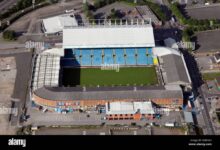
Elland Road isn’t just a stadium—it’s a fortress, a sanctuary, and a symbol of Leeds United’s soul. Since 1919, it has witnessed triumphs, tragedies, and timeless moments.
Architecture and Atmosphere
Elland Road has evolved over the decades, with stands like the West Stand and Kop End creating an intimidating atmosphere. The stadium’s capacity of over 37,000 makes it one of the largest in England.
- Opened in 1897, adopted by Leeds United in 1919
- Hosted England internationals and UEFA Cup matches
- Famous for the ‘Marching On Together’ anthem
The sound of 37,000 fans singing in unison is spine-chilling. It’s a ritual that unites generations of supporters.
Historic Matches at Elland Road
Elland Road has hosted some of football’s most memorable games. From European nights to Championship deciders, the stadium has seen it all.
- 1975: European Cup semi-final second leg vs Barcelona
- 2001: Champions League quarter-final vs Deportivo La Coruña
- 2020: Promotion-clinching win vs Barnsley
The 2020 victory over Barnsley, sealed by a Jack Harrison goal, triggered scenes of euphoria. Fans flooded the pitch, tears in their eyes, as decades of longing were fulfilled.
Fan Culture and Community
Leeds United fans are among the most passionate in the world. The ‘Leeds United Supporters’ Trust’ and various fan groups work to preserve the club’s heritage and influence decisions.
- Organize charity events and community outreach
- Run independent media and podcasts
- Travel in massive numbers for away games
The club’s motto, ‘Marching On Together,’ reflects this unity. It’s not just a slogan—it’s a way of life.
Leeds United’s Future: Ambitions and Challenges
As Leeds United navigates the modern football landscape, the club faces both exciting opportunities and daunting challenges. Sustainability, youth development, and strategic planning are key to long-term success.
Youth Academy and Player Development
The Leeds United Academy has produced talents like Harry Kewell, Ian Rush, and more recently, Kalvin Phillips. Investing in youth remains a priority.
- Category One academy status in the EPPP system
- Focus on technical skills and mental resilience
- Partnerships with local schools and grassroots clubs
The club aims to reduce reliance on expensive transfers by nurturing homegrown stars.
Ownership and Financial Strategy
Under owner Andrea Radrizzani, Leeds has sought financial stability. The sale of key players like Raphinha and Phillips has sparked debate, but reinvestment is crucial.
- Focus on sustainable growth over short-term glory
- Exploring commercial partnerships and global branding
- Stadium redevelopment plans under discussion
Balancing ambition with fiscal responsibility will define the next era.
European Dreams Rekindled
After years away, Leeds United fans dream of European football once more. Qualifying for the Europa Conference League or Europa League is a realistic target.
- Strong performances in cup competitions needed
- Building a squad capable of multi-competition football
- Leveraging Bielsa’s legacy to attract top talent
With the right strategy, Leeds can return to the continental stage and reignite its European legacy.
What is Leeds United’s most successful period?
The 1970s under Don Revie is widely regarded as Leeds United’s most successful era. They won two First Division titles (1969, 1974), the FA Cup (1972), and reached the European Cup final in 1975. This period established them as a dominant force in English and European football.
Who is the greatest Leeds United player of all time?
While opinions vary, Billy Bremner is most frequently cited as the greatest Leeds United player. His leadership, consistency, and embodiment of the club’s fighting spirit make him a legendary figure. Jack Charlton and Lucas Radebe are also strong contenders.
Why was Marcelo Bielsa so important to Leeds United?
Marcelo Bielsa transformed Leeds United’s playing style and culture. His high-pressing, attacking philosophy led to promotion in 2020 and revitalized fan enthusiasm. He restored pride and identity to the club, earning the nickname “The Messiah” from supporters.
What is the significance of ‘Marching On Together’?
“Marching On Together” is Leeds United’s anthem and unofficial motto. It symbolizes unity, resilience, and the unbreakable bond between the club and its fans. Sung before every match, it reflects the collective spirit that defines Leeds United.
Has Leeds United ever won the Premier League?
No, Leeds United has never won the Premier League. Their last league title came in 1974, before the Premier League era began in 1992. They won the final First Division title in 1992 but were unable to sustain success in the new league structure.
Leeds United’s story is one of triumph, tragedy, and enduring passion. From the glory days of Don Revie to the modern revival under Bielsa, the club has weathered storms and emerged stronger. Their legacy is built on resilience, identity, and an unyielding connection with their fans. As they look to the future, one thing remains certain: Leeds United will keep marching on—together.
Further Reading:
